Table of Contents
- Why Verifying Tree Surgeon Qualifications Matters
- How to Check Tree Surgeon Certificates
- Tree Surgeon Chainsaw Qualifications Explained
- Questions to Ask a Tree Surgeon Before Hiring
- How to Choose a Tree Surgeon You Can Trust
- Red Flags: What to Avoid When Hiring
- Frequently Asked Questions
Last Updated: October 14, 2026
Why Verifying Tree Surgeon Qualifications Matters
Hiring an unqualified tree surgeon puts your property at serious risk. A poorly trained climber can damage your trees, injure themselves, or worse. You need someone who knows what they're doing.
Here's the reality: anyone can call themselves a tree surgeon. There's no single register you can check. No mandatory licence you can verify instantly. That's why you need to know how to verify tree surgeon qualifications yourself.
The stakes are high. A tree surgeon working at height without proper training is a liability. Insurance companies won't pay out if the work wasn't done by someone properly qualified. And if something goes wrong, you could face legal consequences.
This guide walks you through the exact steps to check a tree surgeon's credentials before you hire them. We'll show you what qualifications matter, where to verify them, and what questions to ask.
How to Check Tree Surgeon Certificates
The best way to verify tree surgeon qualifications is to ask for proof of specific certifications and then check them independently. Don't just take their word for it.
Start by asking for their chainsaw certificates. A qualified tree surgeon should have formal training in chainsaw operation. The main certifications to look for are:
- NPTC (National Proficiency Tests Council) chainsaw qualifications
- City & Guilds certifications in arboriculture
- NVQ (National Vocational Qualification) in tree surgery
- LANTRA awards in tree work
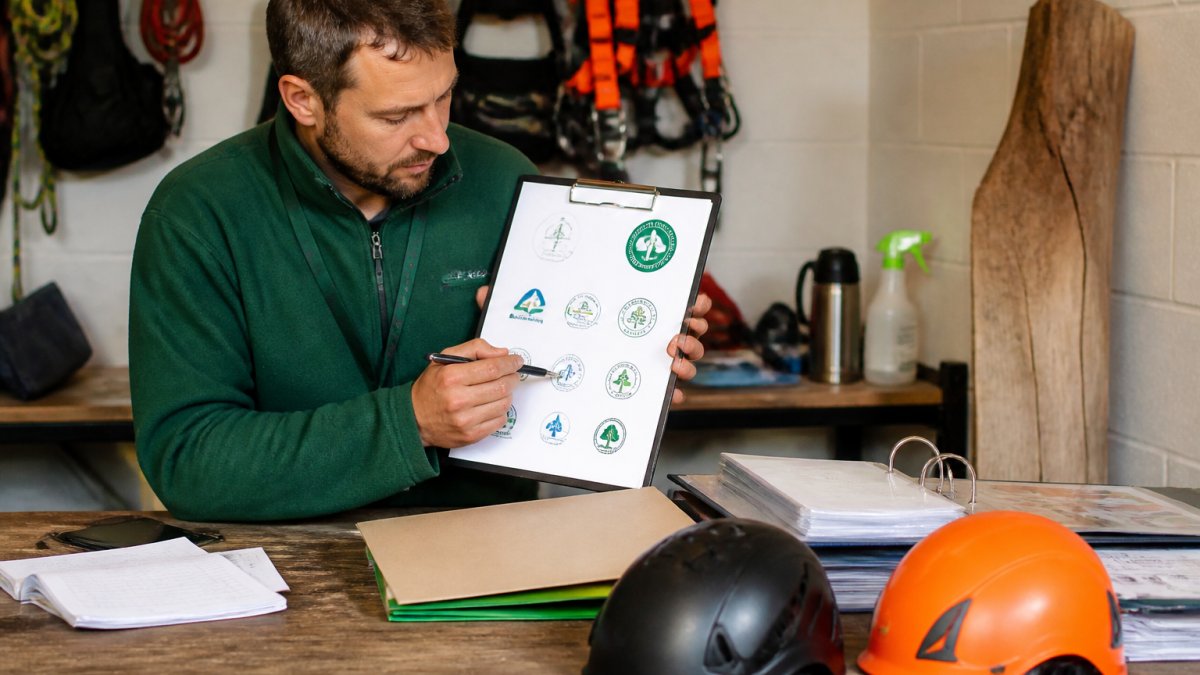
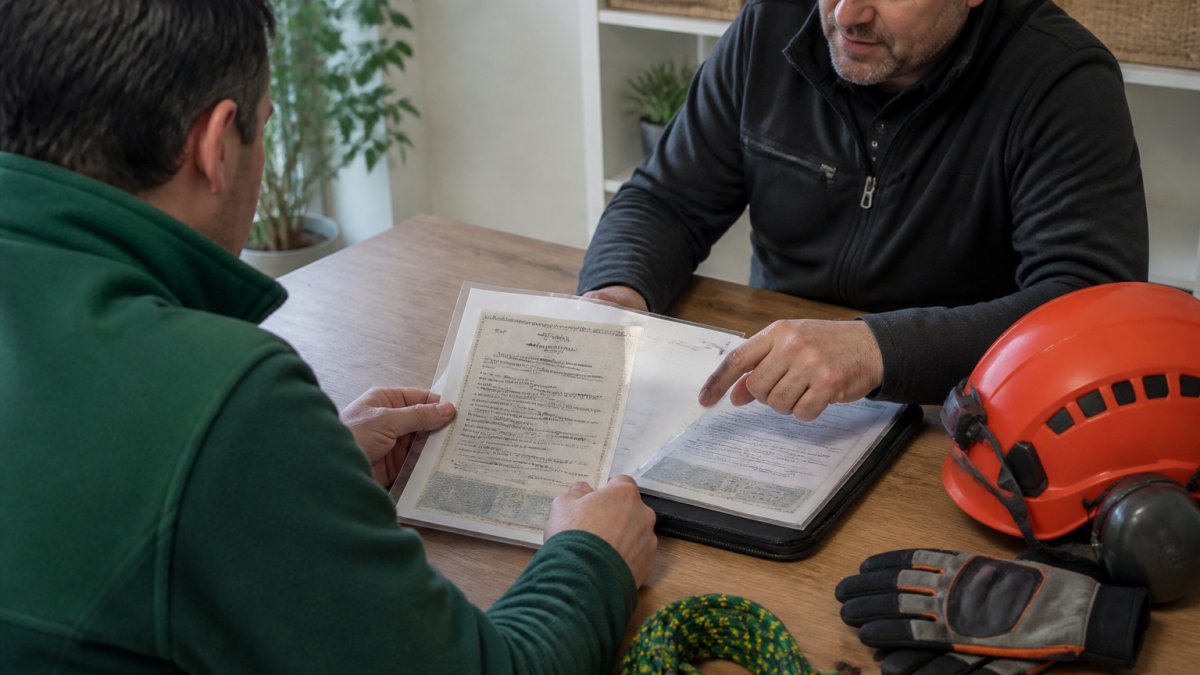
Ask them to show you the actual certificates, not just tell you they have them. Many professionals keep copies on their phone or in their vehicle. If they refuse to show you, that's a red flag.
Once you have the certificate details, you can verify them. Contact the issuing body directly. For NPTC qualifications, you can check the NPTC register. For City & Guilds, their website has a verification tool. Don't rely on the contractor's word alone.
Check the expiry dates too. Many certifications need to be renewed every few years. An expired qualification means they haven't kept up with current standards.
Ask how long they've held their qualifications. Someone who got certified last month is different from someone with 10 years of experience. Both might be qualified, but experience matters.
Tree Surgeon Chainsaw Qualifications Explained
Chainsaw qualifications are non-negotiable. If a tree surgeon can't show you chainsaw training, don't hire them.
There are different levels of chainsaw qualifications. The basic level covers safe operation. Intermediate levels cover more complex cutting techniques. Advanced qualifications cover work at height with chainsaws.
NPTC Level 1 is the entry-level chainsaw qualification. It covers basic safety and operation on the ground. This is the minimum standard.
NPTC Level 2 is for more complex work. It includes felling trees and operating chainsaws in various conditions. This is what most professional tree surgeons should have.
NPTC Level 3 is for advanced work. It covers chainsaw operation while working at height. If your tree surgeon is climbing and cutting, they need this level or equivalent.
Don't assume a higher level is always better. Someone with Level 2 is perfectly qualified for most garden work. Level 3 is specifically for working in trees at height.
Ask when they last renewed their qualification. Standards change. A chainsaw qualification from 15 years ago might not meet current safety standards. Most professionals renew every 5 years.
Ask about their training provider too. Reputable providers include LANTRA, NPTC, and City & Guilds. If they trained with someone you've never heard of, ask more questions.
Questions to Ask a Tree Surgeon Before Hiring
Don't just ask about qualifications. Ask questions that reveal their professionalism and safety standards.
"Can you show me your public liability insurance?" This is essential. If they damage your property or get injured, their insurance covers it. Ask to see the certificate. Check that the cover amount is adequate for the work you need done. A reputable tree surgeon should have adequate public liability cover.
"How long have you been doing this?" Experience matters. Someone with five years of experience has handled more problems than someone with six months. They've seen trees fail in different ways. They know how to handle complications.
"Can you provide references?" Ask for names of recent customers. Contact them. Ask if the work was completed on time, if the site was left clean, and if they'd hire them again. A good tree surgeon won't mind this.
"What's included in your quote?" Ask exactly what they'll do and what they won't. Will they remove the branches? Will they chip them? Will they clear the site? Will they stump grind? Get it in writing. This prevents the surprise costs that catch people out.
"How do you handle emergencies?" If a tree comes down on your property, can they respond quickly? Ask about their emergency call-out service. How long do they typically take to respond? What's the extra cost?
"Are you a member of any professional bodies?" Membership in organisations like the Arboricultural Association shows commitment to standards. It doesn't guarantee quality, but it's a positive sign.
"Can you explain what you'll do and why?" A good tree surgeon explains their approach. They tell you why they're removing certain branches. They discuss the health of the tree. If they just say "yeah, we'll sort it," that's a concern.
"Will you be doing the work yourself?" Ask if they'll be the one climbing and cutting. Some contractors hire subcontractors. That's not necessarily bad, but you want to know who's actually doing the work. James David Forestry Ltd uses full in-house climbers, which means you know exactly who's working on your property.
How to Choose a Tree Surgeon You Can Trust
Beyond qualifications, there are other ways to assess whether a tree surgeon is trustworthy.
Check their online reviews. Google reviews, Facebook recommendations, and industry ratings tell you how they treat customers. Look for patterns. Do they consistently turn up on time? Do they clean up properly? Do they communicate well? One bad review might be unfair. Five similar complaints suggest a real problem.
Ask about their insurance and guarantees. A tree surgeon confident in their work will guarantee it. They'll have public liability insurance. If they're vague about this, walk away.
Look at their previous work. Ask for photos of jobs they've completed. Can they show you a garden they've worked on recently? A professional should be proud to show their work. Bad work is obvious. Poor cuts, branches left hanging, debris scattered everywhere.
Check if they're registered with any professional bodies. Membership in professional bodies like the Arboricultural Association shows they take standards seriously.
Ask about their method for quoting. A good tree surgeon will visit in person or ask for detailed photos and video. They won't quote based on a vague description. They know that complications can arise. They'll give you a price range or explain what might change the cost.
Trust your instinct. If a tree surgeon seems pushy, vague, or unwilling to answer questions, find someone else. You're hiring them to work on your property. You should feel confident in your choice.
James David Forestry Ltd provides free quotes via photo, video, or visit. We're transparent about pricing and explain exactly what we'll do. Our team holds certified chainsaw and climbing qualifications. We're fully insured and have a 5.0 rating based on customer feedback. That's the standard to expect.
Red Flags: What to Avoid When Hiring
Some warning signs should stop you hiring a tree surgeon immediately.
They won't show you certificates. If they claim to be qualified but refuse to provide proof, don't hire them. Simple as that. A professional has nothing to hide.
They quote over the phone without seeing the work. Every tree is different. Every job has variables. A quote given without a proper assessment is a guess. They'll either underestimate and cut corners, or overestimate and you'll overpay.
They pressure you to decide immediately. "I can only do this job next week" or "I need a deposit today" are pressure tactics. A professional is busy, yes. But they'll give you time to decide. They won't rush you.
They don't have public liability insurance. This is non-negotiable. If they get injured on your property or damage something, their insurance covers it. No insurance means you're liable. Don't risk it.
They quote significantly lower than everyone else. There's cheap, and there's too cheap. If one quote is half the price of others, ask why. Are they cutting corners? Using unqualified staff? Skipping safety steps? Cheap work often costs more in the long run.
They won't provide references. A professional should have happy customers willing to vouch for them. If they refuse or get defensive, that's suspicious.
They promise to remove the stump "for free" or include it in the price.
They don't discuss safety. Tree work is dangerous. A good tree surgeon talks about how they'll keep the site safe. They discuss what could go wrong. If they brush over safety concerns, they're not taking it seriously.
They arrive without proper equipment. Professional tree surgeons arrive with climbing gear, safety ropes, harnesses, and first aid kits. If they show up with just a chainsaw and a ladder, they're not properly equipped.
They won't put the quote in writing. Everything should be documented. A written quote protects both of you. If they only give you a verbal estimate, you have no protection if the price changes.
Verifying tree surgeon qualifications protects your property and your safety. Ask for certificates. Check them independently. Ask tough questions. Look at reviews and references. A qualified, professional tree surgeon has nothing to hide. They'll answer your questions, show you their credentials, and explain their work clearly.
When you're ready to hire, James David Forestry Ltd is here to help. We hold certified chainsaw and climbing qualifications. We're fully insured with transparent pricing and no hidden costs. We provide free quotes and explain exactly what we'll do. Get in touch for a free assessment and see the difference professional tree surgery makes.
Frequently Asked Questions
What qualifications should a professional tree surgeon have?
A qualified tree surgeon should hold appropriate certifications in arboriculture and chainsaw operation. They must also carry public liability insurance and may hold additional certifications in climbing, aerial rescue, and health and safety management.
How can I verify a tree surgeon's qualifications are genuine?
Ask to see original certificates and check the awarding organisation's records directly. Request proof of public liability insurance and ask for their registration number with any professional bodies they belong to. You can contact the organisation that issued their qualification to confirm validity. A trustworthy tree surgeon will provide this information without hesitation and may offer references from previous clients.
What should I ask a tree surgeon about their chainsaw experience?
Ask specifically about their chainsaw operator certificates and when they obtained them. Request details about their climbing qualifications and any additional certifications in rescue or advanced techniques. Find out how long they've been working in tree surgery and whether they carry insurance that covers all the work they're proposing. Legitimate professionals will explain their qualifications clearly and answer follow-up questions.
How do I know if a tree surgeon is insured?
Request a copy of their public liability insurance certificate and check that it covers the specific work you need done. The certificate should show current coverage dates and adequate cover for tree work. You can contact their insurance provider to verify the policy is active. Never proceed with work from someone who cannot produce current insurance documentation.
Need a tree surgeon?