Last Updated: October 23, 2026
Quick Summary
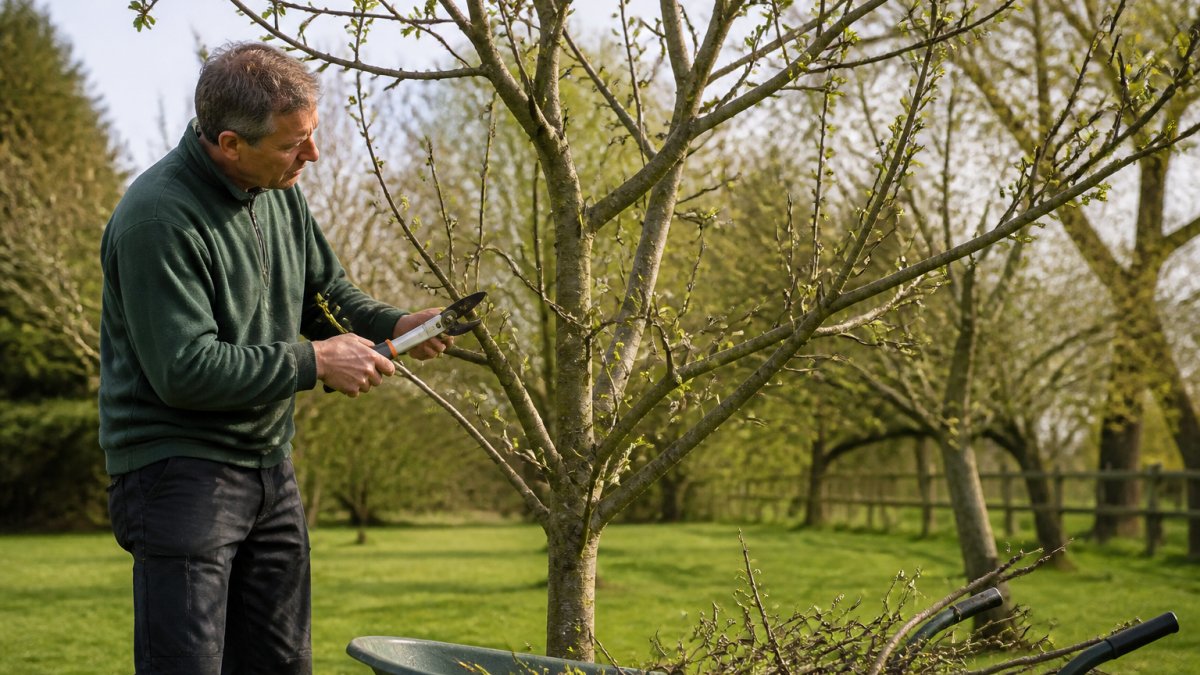
To maintain healthy trees, inspect them every few months for signs of damage, disease, or pest problems, and prune at the right time using proper techniques. Early detection of issues like bark damage, dead branches, or fungal growth allows you to address problems before they become serious.
- Walk around your property every few months and check bark, branches, and overall tree shape for warning signs
- Winter (November to February) is the best time for most pruning when trees are dormant and won't bleed sap
- Contact a professional tree surgeon if you notice large dead branches, trunk damage, pest infestation, or unusual leaning
- Check if your tree has a Tree Preservation Order by searching your local authority's website by postcode
- Verify any tree surgeon holds minimum £6 million public liability insurance and chainsaw certification before hiring
Table of Contents
- Inspect Your Trees Regularly for Early Warning Signs
- Signs of Tree Disease in the UK and How to Respond
- Prune at the Right Time and in the Right Way
- Understand Tree Preservation Orders Guidance
- How to Verify Tree Surgeon Insurance and Qualifications
- Maintain Trees Between Professional Visits
- When to Call a Professional Tree Surgeon
- Frequently Asked Questions
Inspect Your Trees Regularly for Early Warning Signs
How to maintain healthy trees starts with knowing what to look for. Regular inspections catch problems early, when they're easier to fix. Most homeowners skip this step, then panic when a tree suddenly shows serious damage.
Walk around your property every few months. Look at the bark, branches, and overall shape. A healthy tree should have a strong structure and green foliage. If something looks off, it probably is.
What to look for during a visual inspection
Check these specific areas during your inspection:
- Bark damage, splits, peeling sections, or missing patches
- Dead branches, branches with no leaves or buds that don't bend
- Leaning trunk, trees that tilt more than they did before
- Fungal growth, mushrooms, shelf fungi, or white growth on the trunk
- Pest damage, holes in bark, sawdust at the base, or sticky residue
- Branch dieback, sections of the crown that are thinning out
Take photos if you spot something unusual. This helps you track changes over time and shows a professional what you're dealing with.
When to call in a professional
Some issues need expert eyes. Contact a qualified tree surgeon if you notice:
- Large dead branches in the crown
- Significant trunk damage or cavities
- Signs of major pest infestation
- Unusual leaning or movement
- Multiple trees showing similar symptoms
- Trees near structures or power lines with visible damage
James David Forestry Ltd can assess your trees and advise whether they need treatment or removal.
Signs of Tree Disease in the UK and How to Respond
Tree disease spreads fast once it takes hold. Knowing what to look for means you can act before it becomes a real problem. Early intervention saves trees and protects your property.
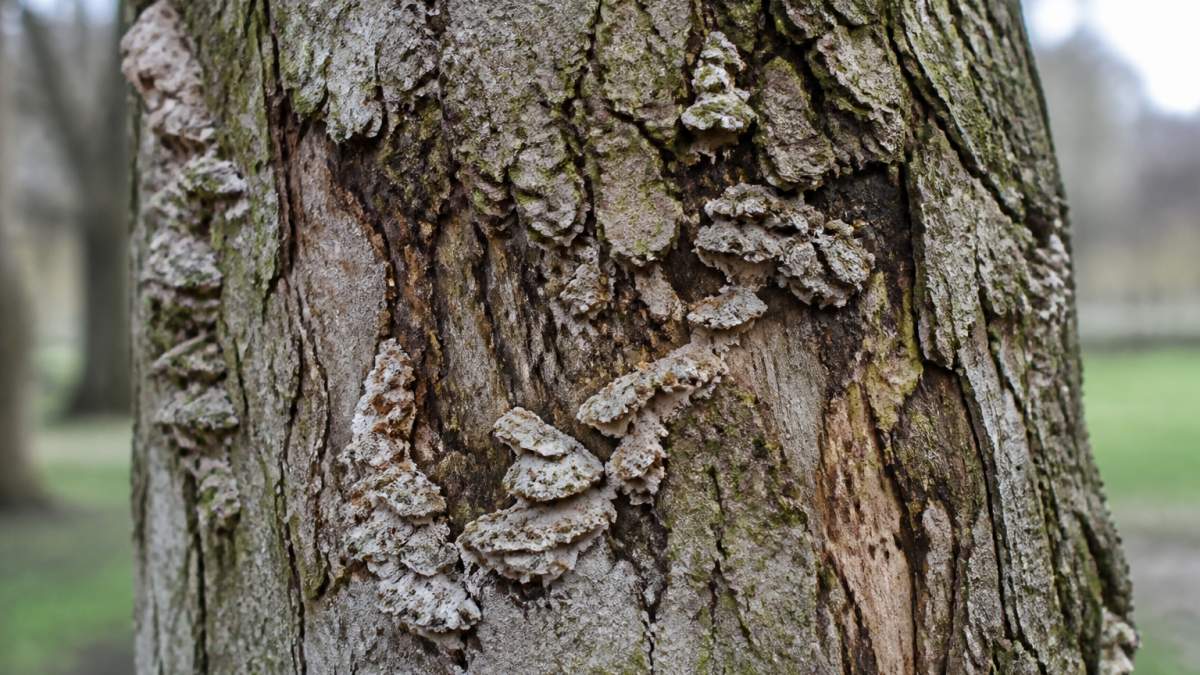
Common diseases affecting UK trees
Several diseases are common in this region:
Ash dieback, This is the most serious threat to ash trees. Look for crown dieback, diamond-shaped lesions on branches, and black buds. Once a tree shows symptoms, it will decline. There's no cure.
Oak wilt, Oak trees develop brown or yellow discolouration in the leaves.
Phytophthora (sudden oak death), Causes bleeding cankers on the trunk and branch dieback.
Honey fungus, Appears as mushrooms at the base and causes root rot.
Elm disease, Affects elm trees, causing wilting and branch dieback.
Canker diseases, Create sunken areas on branches and the trunk.
If you spot any of these symptoms, don't wait.
Taking action before disease spreads
Speed matters with tree disease. The moment you suspect a problem, get a professional assessment. Some diseases can be managed with pruning.
Diseased branches should be removed promptly. Use proper pruning cuts to avoid spreading infection.
If a tree is confirmed to have a serious disease like ash dieback, removing it stops the disease from spreading to other trees nearby.
Prune at the Right Time and in the Right Way
Pruning shapes your trees and keeps them healthy. Done correctly, it improves structure and reduces disease risk. Done wrong, it damages the tree and invites infection.
Seasonal pruning guidelines for UK trees
Timing matters.
Winter (November to February), This is the best time for most pruning.
Summer (June to August), Light pruning only. Remove dead or crossing branches.
Spring (March to May), Avoid major pruning.
Autumn (September to October), Generally avoid pruning.
Some trees have specific needs.
Never prune in frost. Cuts made during freezing weather are more likely to fail.
Pruning techniques that promote health
Proper cuts are essential.
Retain the branch collar, Don't cut flush to the trunk.
Use sharp tools, Dull saws and secateurs crush tissue and create ragged wounds.
Remove dead wood first, Always take out completely dead branches.
Avoid wound dressing, Modern research shows trees heal better without wound dressing.
Maintaining healthy trees means respecting their natural form. Remove what's necessary.
Understand Tree Preservation Orders Guidance
If your tree is protected by a Tree Preservation Order (TPO), you need permission before cutting it. Breaking the rules can result in significant fines.
What TPOs mean for your property
A TPO is a legal protection placed on a tree by the local authority (Tree Preservation Orders and trees in conservation areas).
TPOs apply to:
- Individual trees marked on the local authority's register
- Trees in conservation areas (all trees are automatically protected)
- Groups of trees specified in the order
Check your local authority's website to see if your trees are protected. Search by postcode or property address.
Penalties for breaching a TPO include fines up to £20,000 and enforcement notices requiring you to restore the tree (Information on trees and preservation).
Getting consent for tree work
If your tree has a TPO, you must apply for consent before any significant work. The process is straightforward:
- Contact your local authority, Ask for a TPO application form
- Describe the work, Explain what you want to do and why
- Provide evidence, Include photos, a tree report, or a professional assessment if the tree is diseased or dangerous
- Submit the application, Include the form, photos, and any supporting documents
- Wait for approval, This typically takes 4-8 weeks
- Proceed once approved, Keep your consent letter for your records
Emergency work (like a fallen tree blocking access) can sometimes proceed without prior consent, but you should notify the local authority immediately.
How to Verify Tree Surgeon Insurance and Qualifications
Not all tree surgeons are properly qualified or insured. Hiring the wrong person puts your property and safety at risk. Always verify credentials before booking work.
What insurance cover you need to see
A qualified tree surgeon carries public liability insurance. This covers damage to your property or injury to people during the work.
Minimum cover should be £6 million for public liability. Ask to see the certificate. It should show:
- The insurance company name
- The policy number
- The cover amount
- The expiry date
James David Forestry Ltd holds full public liability cover and provides proof before any work starts.
Never accept verbal assurance. Always ask for written proof. A legitimate tree surgeon will have no problem showing you their insurance.
Checking credentials and industry standards
Proper qualifications matter. A tree surgeon should hold:
Chainsaw certification, Level 1 or 2 certification in chainsaw operation. This is the minimum legal requirement for anyone using a chainsaw professionally.
Climbing qualifications, IRATA or equivalent certification for working at height.
Arboriculture qualifications, National Diploma in Arboriculture or equivalent. This shows they understand tree biology and care.
First aid certification, Current first aid training shows they can respond to emergencies.
Ask to see copies of these qualifications. Legitimate tree surgeons keep them current and are happy to share them.
Check membership in professional bodies:
- Arboricultural Association
- National Association of Tree Officers (NATO)
- Royal Forestry Society
Membership shows commitment to professional standards and ongoing training.
Maintain Trees Between Professional Visits
You don't need a professional for routine care. Basic maintenance between visits keeps trees healthy and catches new problems early.
Basic care tasks for homeowners
These tasks are safe for most homeowners:
- Remove dead branches, Use a handsaw to cut out branches that are completely dead
- Clear debris, Remove fallen branches, leaves, and deadwood from around the base
- Check for damage, Look for new cracks, peeling bark, or signs of pests
- Monitor growth, Note if the tree is growing normally or if branches are thinning
- Remove crossing branches, If two branches rub together, remove the weaker one
Don't attempt major pruning, felling, or work at height. These require professional equipment and training.
Watering, mulching, and feeding
Young trees need regular watering. Mature trees usually manage on their own unless there's a drought.
Watering, Water newly planted trees weekly for the first year.
Mulching, Apply 5-10cm of mulch around the base, keeping it a few centimetres away from the trunk (Mulches and Mulching).
Feeding, Most established trees don't need feeding if they're healthy.
Avoid piling mulch against the trunk. This traps moisture and invites rot and pest damage.
When to Call a Professional Tree Surgeon
Some jobs are simply too risky or complex for a homeowner. Know when to bring in an expert.
Call a professional tree surgeon if you need to:
- Remove large trees, Trees over 5 metres tall or near structures
- Prune at height, Any work requiring climbing or working above shoulder height
- Remove dead wood, Dead branches over 5cm diameter or in the upper crown
- Treat disease, Any suspected disease needs professional diagnosis
- Crown reduction, Significant reshaping of the tree
- Deal with storm damage, Fallen trees or major branch breakage
- Handle TPO trees, Any work on protected trees
A professional assessment costs far less than property damage or injury. James David Forestry Ltd provides free quotes via photo, video, or site visit.
Frequently Asked Questions
What are the signs of tree disease in the UK I should watch for?
Look for dead branches, unusual leaf discolouration, bark splitting or peeling, fungal fruiting bodies (mushroom-like growths), bleeding cankers, or sudden leaf loss. Common UK diseases include ash dieback, oak processionary moth damage, and honey fungus. If you notice any of these signs, photograph them and contact a qualified tree surgeon to assess whether treatment or removal is needed.
How do I verify a tree surgeon has proper insurance?
Ask to see their public liability insurance certificate before work begins. Reputable tree surgeons should have cover of at least £6 million. Check that the certificate is current and covers tree surgery work. Request their chainsaw and climbing qualifications. A professional will provide this information willingly and may offer a free quote to discuss your needs.
Do I need permission to prune trees in a conservation area?
Yes. Trees in conservation areas are protected, and you must notify your local planning authority at least six weeks before carrying out work. Trees with a Tree Preservation Order (TPO) require written consent from your council before any pruning, lopping, or felling. Failure to obtain permission can result in significant fines. Always check with your local authority or ask your tree surgeon to verify the status before work begins.
How often should I have my trees professionally inspected?
Most trees benefit from a professional inspection every 1-3 years, depending on age and condition. Older trees, those showing signs of disease, or trees near buildings should be checked annually. After severe weather or storm damage, an urgent inspection is essential. A professional can assess your specific trees and recommend an inspection schedule tailored to your property's needs.
Maintaining healthy trees protects your property and creates a safer, more attractive garden. Regular inspection, proper pruning, and professional care when needed keep trees strong for decades. James David Forestry Ltd has the expertise and insurance to handle everything from routine maintenance to emergency removal. Get a free quote today and discover how professional tree care transforms your outdoor space.

Need a tree surgeon?