Table of Contents
- Why Storm Damage to Trees Matters for Your Property
- Signs of Hazardous Trees: What to Look For
- Tree Health Assessment for Storm Resilience
- Pruning and Crown Reduction to Reduce Wind Resistance
- How to Safely Clear Small Fallen Tree Limbs
- Preparing Your Garden for Storm Season: A Practical Checklist
- When to Call a Professional Tree Surgeon
- Conclusion
- Frequently Asked Questions
Last Updated: October 2, 2026
Why Storm Damage to Trees Matters for Your Property
Storm damage to trees represents one of the most serious risks to residential and commercial properties. When high winds strike, weak branches fail, entire trees topple, and what seemed like a stable garden can transform into a hazard zone within minutes. Preventing storm damage to garden trees protects both property and safety.
The consequences extend beyond immediate damage. A fallen tree can crush structures, snap power lines, block access routes, and create ongoing liability issues. Even branches that don't fall completely can hang precariously, posing risks during subsequent storms. The cost of emergency removal after a storm far exceeds the cost of preventative work beforehand.
More importantly, many trees can be saved with proper preparation. A tree that appears healthy may harbour structural weaknesses invisible to the untrained eye. Identifying and addressing these vulnerabilities before severe weather arrives is far more effective than dealing with the aftermath. This guide covers the practical steps for preventing storm damage to garden trees, from assessment through professional intervention.
Signs of Hazardous Trees: What to Look For
A hazardous tree displays specific warning signs that indicate vulnerability to storm damage. Learning to recognise these signs means you can act before a tree becomes dangerous.
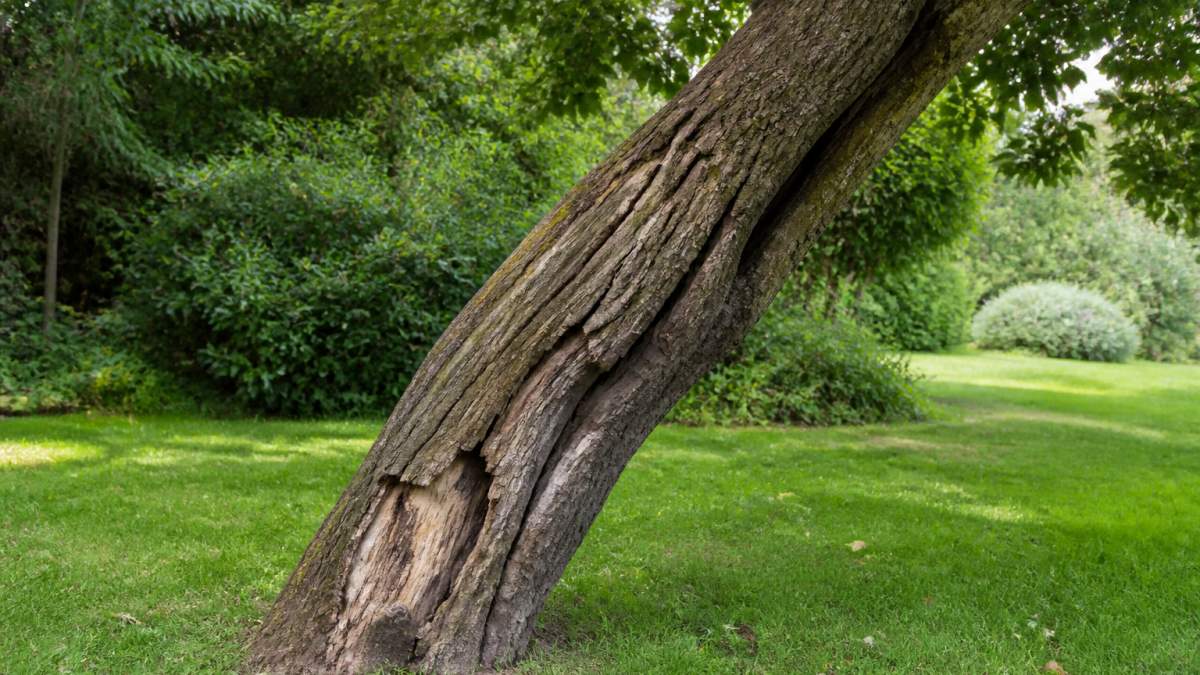
Look for visible structural defects. Cracks running vertically or horizontally through the trunk are serious red flags. Splits at branch junctions, where two major limbs meet, indicate weakness in the tree's framework. A tree that leans significantly to one side, especially if the lean has worsened recently, may have compromised root systems or structural failure beginning at the base.
Dead or dying branches are equally important. Branches that have no leaves, show peeling bark, or appear brittle will snap in wind rather than flex. These dead limbs pose immediate danger even in moderate winds. Cavities or hollow sections in the trunk suggest internal decay that weakens the entire structure.
Pay attention to branch attachment angles. Branches growing at acute angles (less than 45 degrees from the trunk) are weaker than those at wider angles. When branches grow tightly together in a "V" shape rather than a "U" shape, they're prone to splitting under stress.
Look for signs of pest damage or disease. Fungal fruiting bodies (shelf-like growths on the trunk), insect galleries visible under loose bark, or unusual foliage discolouration all indicate internal compromise. A tree struggling with disease will fail more readily in storms.
Tree Health Assessment for Storm Resilience
Assessing tree health for storm resilience requires examining both structure and vigour. A healthy tree has better capacity to withstand wind stress, whilst a declining tree becomes increasingly hazardous.
Start with the crown, the upper canopy of the tree. A balanced, full crown indicates good health. If the crown is one-sided, sparse, or heavily weighted on one side, the tree may be unbalanced and prone to toppling. Dead branches should comprise less than 25% of the crown; anything more suggests significant decline.
Examine the trunk for damage. Run your hand along the bark (carefully, watching for thorns or rough sections). Smooth bark without wounds is a good sign. Cankers, sunken or raised areas where bark is missing or discoloured, indicate disease entry points. Bark that peels easily suggests the tree is stressed or dying.
Check the root collar, where the trunk meets the soil. This area should be visible and slightly flared. If soil is piled against the trunk, roots may be girdling (strangling) the tree. Exposed roots at the surface can indicate shallow rooting, which reduces stability.
Assess lean and movement. A slight lean is normal for many trees, but a pronounced lean, especially if it's worsened recently, is concerning. If possible, observe the tree in wind. Excessive swaying, particularly in the upper crown, suggests weak branch attachments or root issues.
Consider the tree's age and species. Older trees may be more vulnerable if they haven't been maintained. Some species are naturally weaker in wind (such as willows and poplars), whilst others are inherently stronger (such as oaks and conifers). Species vulnerability varies, and understanding what you're dealing with helps prioritise action.
Pruning and Crown Reduction to Reduce Wind Resistance
Proper pruning is one of the most effective ways to reduce wind resistance and prevent storm damage to garden trees. Strategic removal of problematic branches improves both safety and the tree's appearance.
Crown reduction involves selectively shortening branches to reduce the overall size and weight of the canopy. This decreases the wind load the tree must withstand. Unlike topping, which involves cutting the main trunk at an arbitrary height and is harmful to trees, crown reduction removes branches back to natural branch collar points, allowing the tree to compartmentalise wounds and continue growing healthily.
The process begins by removing dead wood entirely.
How to Safely Clear Small Fallen Tree Limbs
When branches do fall, clearing them safely is essential. Small limbs can usually be handled without professional help, but larger branches require care and often professional expertise.
Never attempt to clear branches that are:
- Touching or tangled with power lines
- Resting against structures or vehicles
- Part of a tree that's still leaning or unstable
- Larger than you can comfortably lift
Preparing Your Garden for Storm Season: A Practical Checklist
Systematic preparation before storm season significantly reduces risk. This checklist covers the key actions to take.
Early Autumn (August-September):
- Walk your garden and identify any trees showing signs of hazard (lean, dead wood, cavities, weak branches)
- Contact a professional tree surgeon for assessment of any questionable trees
- Remove dead branches and thin crowns on healthy trees
- Clear gutters and downpipes of leaves and debris to prevent water damage
Mid-Autumn (October-November):
- Complete any planned pruning or crown reduction work
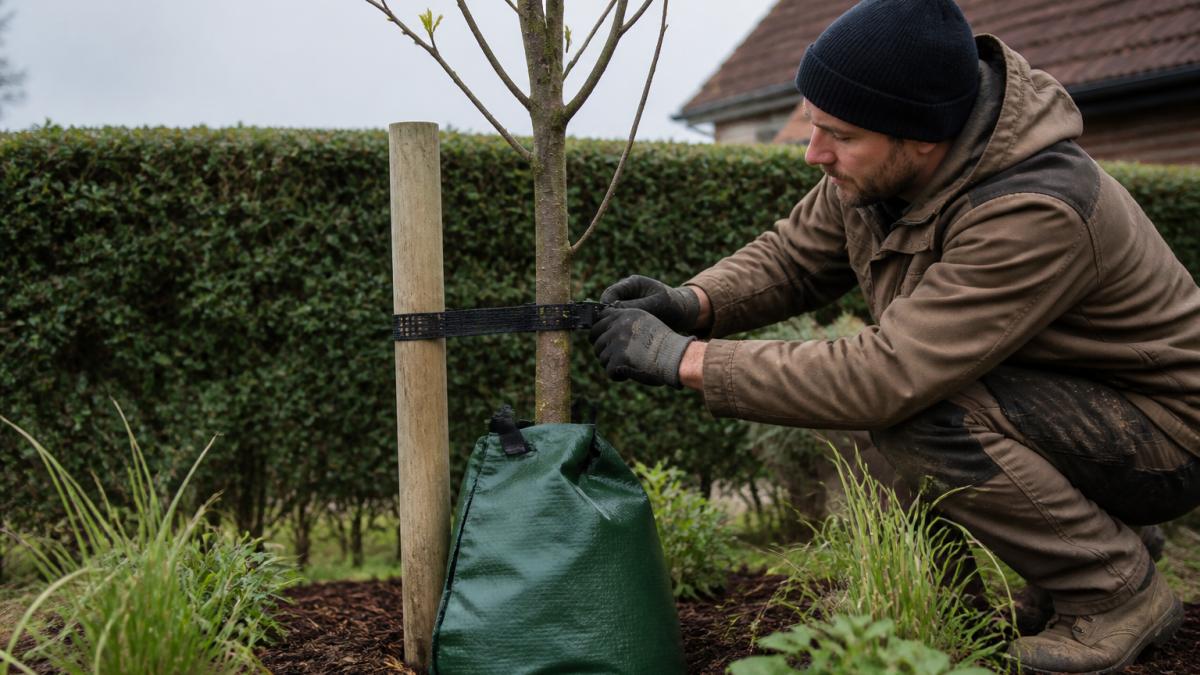
- Check tree stakes and ties on younger trees; ensure they're not too tight
- Inspect fencing and structures near trees for damage or weakness
- Trim back branches overhanging roofs or power lines
Winter (December-February):
- After storms, inspect trees for new damage or movement
- Clear fallen branches promptly
- If a tree shows new signs of hazard (increased lean, fresh cracks), call a professional immediately
- Document any damage with photographs for insurance purposes
Spring (March-May):
- Assess the results of winter storms
- Plan any remedial work needed
- Monitor trees for disease or pest issues that may weaken them
When to Call a Professional Tree Surgeon
Some situations require professional expertise. Knowing when to call a tree surgeon prevents both injury and further damage to your trees.
Call a professional immediately if:
- A tree is leaning significantly or has recently increased its lean
- The trunk shows large cracks or splits
- Major branches are dead or dying (more than 25% of the crown)
- A tree is growing too close to structures or power lines
- The tree has cavities or signs of serious disease
- A tree has fallen or is partially fallen
- Branches are touching or near power lines
- You're uncertain about a tree's safety
Conclusion
Preventing storm damage to garden trees is far more cost-effective and less stressful than managing the aftermath. Regular assessment, strategic pruning, and professional intervention when needed keep your garden safe and your trees healthy through severe weather.
Frequently Asked Questions
How can I tell if my tree is at risk of falling during a storm?
Look for visible signs: trunk cracks or splits, severe lean away from vertical, dead or broken branches, fungal growth at the base, or roots lifting from soil. Trees with dense foliage and shallow root systems (common in sandy or clay soils) are more vulnerable. If you spot multiple warning signs, have a qualified tree surgeon assess it before the next storm season.
What should I do if a tree branch falls in my garden?
For small branches under 5 cm diameter, you can often clear them yourself using a handsaw and secateurs. Larger branches or those near structures, power lines, or fences require professional removal. Never attempt to cut branches above shoulder height or those under tension. Document any damage for insurance purposes and contact a tree surgeon if the tree shows signs of stress or further instability.
How does pruning help prevent storm damage to trees?
Strategic pruning reduces wind resistance by removing dense foliage and crossing or weak branches that catch wind. Crown reduction, carefully reducing the overall size and weight of the canopy, lowers the centre of gravity and decreases leverage on the root system. Professional pruning also removes dead wood and improves air flow through the crown, making the tree more stable in high winds.
How often should I have my trees inspected by a professional?
Annual inspections are recommended, ideally before autumn and winter storm seasons. After severe weather, inspect trees immediately for damage. Mature trees (over 20 years old) and those showing early warning signs should be checked more frequently. A professional tree health assessment identifies structural weaknesses, disease, and root problems that increase storm risk.
What tree species are most resistant to high winds?
Species with flexible wood and compact crowns tend to fare better: hawthorn, rowan, birch, and native oak varieties. Fast-growing softwoods like poplar and willow, and trees with dense, heavy foliage like large conifers, are more vulnerable. Local soil and exposure matter significantly, a tree suited to your site's conditions will always be more resilient than an unsuitable species, regardless of species reputation.
What does tree health assessment for storm resilience involve?
A professional assessment examines root stability, trunk integrity, branch structure, and crown density. The surveyor checks for disease, pest damage, and environmental stress. They evaluate soil conditions, tree age, and site exposure to wind. The assessment identifies which trees pose risk, which can be improved through pruning, and which may need removal, giving you a clear action plan before storms arrive.
Protecting your garden from storm damage starts with understanding your trees and taking action before the weather turns dangerous. James David Forestry Ltd brings professional expertise and reliable service to every job, from routine crown reduction to emergency response. Get your free quote and enjoy a safer, more beautiful garden.
Need a tree surgeon?