7 Warning Signs of Tree Disease Every Formby Owner Should Know
Editorial Team · 11 min read · 25/10/2026
Last Updated: October 25, 2026
Quick Summary
To identify tree disease, check the leaves first for yellowing between veins, dark spots, premature drop and curling, then inspect the trunk for sunken bark, cracks, oozing sap and fungal growths at the base. Tree disease is any condition caused by fungi, bacteria or pests that damages a tree's health and structure, and it tends to be patchy rather than even. Call a tree surgeon straight away if the trunk, roots or main limbs are involved.
- Spend ten minutes per tree with a torch, checking foliage, trunk and the ground at the base.
- Disease tends to be patchy, while stress from drought or compaction hits a tree evenly all over.
- There is no spray that fixes a diseased mature tree; pruning out infected wood is what works.
- Clean tools with disinfectant between cuts and bin infected material rather than composting it.
- Call a tree surgeon if dieback covers more than a quarter of the crown.
Table of Contents
- Why Spotting Tree Disease Early Saves You Money
- The First Signs of Tree Disease to Check This Week
- Common Tree Diseases and Symptoms You'll See in Merseyside Gardens
- Diseased or Just Stressed? How to Tell the Difference
- Tree Disease Treatment: What Works and What Doesn't
- When to Call a Tree Surgeon for a Diseased Tree
- Stopping the Spread: Simple Steps After You Identify a Problem
- Book a Free Photo Assessment With James David Forestry Ltd
- Frequently Asked Questions
Why Spotting Tree Disease Early Saves You Money
Catching a problem early is the difference between a small pruning job and a full removal. Learning how to identify tree diseases in Formby gardens starts with one simple habit: look closely, and look often.
Tree disease is any condition caused by fungi, bacteria or pests that damages a tree's health and structure. Most problems start small. A few spotted leaves. A patch of dead bark. A shelf of fungus at the base.
The trouble is that trees hide stress well. By the time a crown thins out, the damage below may be years old. At James David Forestry Ltd, we see this constantly across Merseyside and West Lancashire. Owners call about a "sudden" problem that has been building quietly for seasons.
Early spotting saves money in three ways:
- Small pruning jobs cost far less than removals
- You avoid emergency call-outs after a limb fails
- Healthy neighbouring trees stay healthy
The seven warning signs below cover what we check on every visit.
The First Signs of Tree Disease to Check This Week
Start at eye level and work upwards. The first signs of tree disease usually show in the leaves before anything else changes.
Grab a torch and spend ten minutes on each tree. Check the foliage, then the trunk, then the ground around the base. Note anything unusual with photos.
Leaf Symptoms: Discolouration, Spots and Early Drop
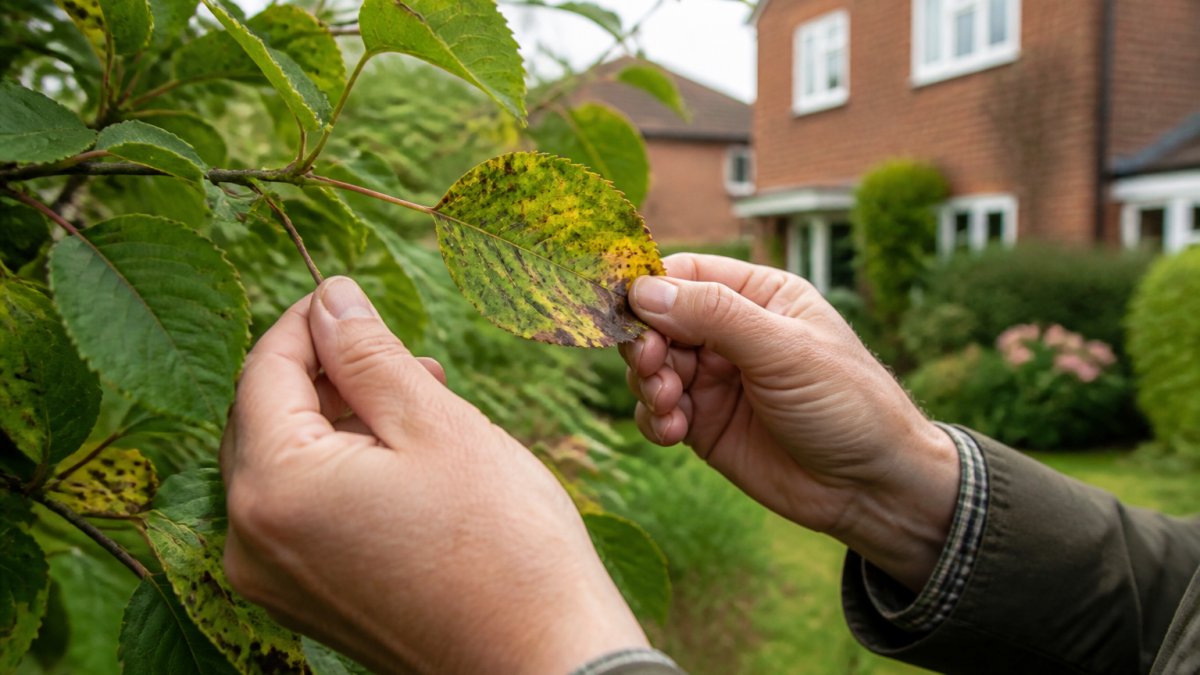
Leaves are the earliest warning system a tree has. Watch for these changes:
- Yellowing between veins while veins stay green
- Dark spots or blotches that spread across the leaf
- Premature drop in late summer rather than autumn
- Curling or wilting on branches that still look healthy
- Sticky residue on lower leaves, a sign of aphids or scale
Some leaf drop is normal. A tree shedding heavily in August is not.
Trunk and Branch Clues: Cankers, Cracks and Fungal Growths
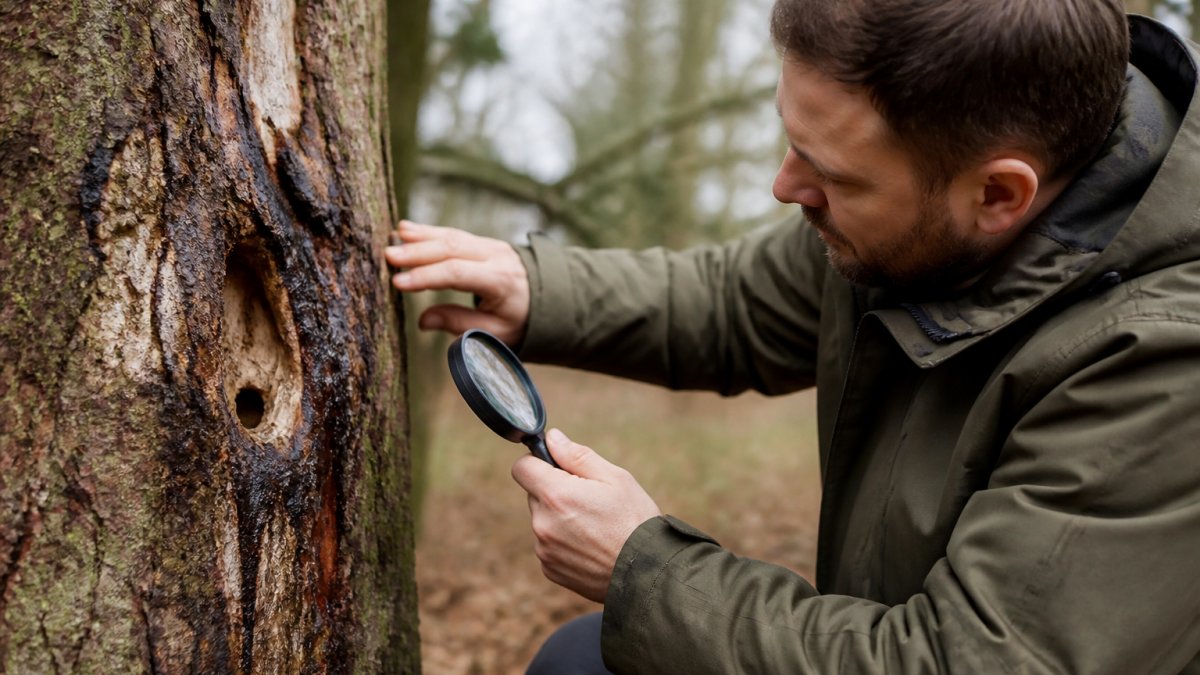
The trunk tells you what the leaves cannot. Look for sunken patches of bark, splits in the wood, and anything growing on the surface.
Fungal growth at the base deserves particular attention. Honey fungus decays roots and can weaken a tree's anchorage long before the crown shows any sign. If you spot creamy-white sheets under the bark or black bootlace strands in the soil, read our guide on honey fungus and how serious it is for garden trees.
Other trunk clues include:
- Bleeding or oozing sap from cracks
- Sawdust at the base, a sign of borers
- Loose or powdery bark
- Cracks running vertically up the trunk
Common Tree Diseases and Symptoms You'll See in Merseyside Gardens
Our damp climate suits fungal problems. Common tree diseases and symptoms here tend to fall into a few familiar groups.
Canker is a dead patch of bark that spreads over time. It shows as sunken, discoloured tissue, often with a raised edge.
Leaf spot covers foliage in dark patches, usually after a wet spring. Most trees cope, but repeated years weaken them.
Dieback starts at the tips and works inward. Whole branches fail to leaf up in spring.
Root rot shows above ground as thinning crowns and poor growth, with no obvious cause.
Symptoms overlap constantly. Drought, waterlogging and soil compaction can mimic disease exactly. That is why a proper look at the whole tree matters more than any single symptom. For a deeper reference on what each condition looks like, see our guide to common tree diseases and when to call a professional.
Diseased or Just Stressed? How to Tell the Difference
Stress and disease look almost identical from a distance. The difference is usually in the pattern.
Stress hits evenly. A tree short of water thins out all over, and its leaves may scorch at the edges. Disease tends to be patchy, appearing on one side, one branch or one section of the trunk.
Ask three questions:
- Did the problem appear suddenly or gradually? Weather damage is sudden. Disease is slow.
- Is the damage even or localised? Even damage points to stress.
- Has anything changed nearby? New paving, building work or soil disturbance compacts roots and stresses trees.
A tree that has been stressed for two seasons is far more likely to pick up a disease. Weak trees attract problems.
Tree Disease Treatment: What Works and What Doesn't
Here is the part most guides get wrong. There is no spray that fixes a diseased mature tree.
What works:
- Pruning out infected wood with clean cuts back to healthy growth
- Improving growing conditions, such as mulching and relieving compaction
- Removing the tree where the risk to people or property is too high
- Monitoring with photos taken at the same angle each season
What doesn't:
- Painting wounds with sealant, which traps moisture
- Feeding a sick tree heavily, which pushes soft growth
- Ignoring a problem and hoping it stabilises
Some diseased trees can be saved through the right pruning and care. Others cannot, and the honest answer matters more than a hopeful one. Our team explains whether a tree surgeon can save a diseased tree and what that decision involves.
When to Call a Tree Surgeon for a Diseased Tree
Call a tree surgeon when the trunk, roots or main limbs are involved. Leaf problems can wait a week. Structural problems cannot.
Ring us straight away if you see:
- Fungal brackets on the trunk or at the base
- Cracks or splits in main limbs
- A tree leaning that did not lean before
- Dead branches hanging over a path, roof or driveway
- Dieback across more than a quarter of the crown
Safety comes first here. A diseased tree can drop limbs without warning, and root decay removes the anchor that keeps it upright. Do not climb or cut a suspect tree yourself.
For Formby homeowners, we also check Tree Preservation Orders before any work starts. Our Formby tree care service for pines, conifers and coastal gardens covers exactly that.
Ring us straight away if you spot any of these structural warning signs.
| Warning sign | Where to look |
|---|---|
| Fungal brackets | On the trunk or at the base |
| Cracks or splits | In main limbs |
| New lean | A tree leaning that did not lean before |
| Dead branches | Hanging over a path, roof or driveway |
| Dieback | Across more than a quarter of the crown |
Stopping the Spread: Simple Steps After You Identify a Problem
Act the same day you spot something. Spores and pests travel easily between trees.
- Clean your tools with disinfectant between cuts and between trees
- Bag and bin infected material. Do not compost it or leave it in a pile
- Avoid moving soil from around a sick tree to other beds
- Water and mulch affected trees to reduce stress
- Photograph the tree from the same spot monthly to track change
Watch out: leaving cut infected wood stacked near healthy trees is one of the most common ways problems spread across a garden.
Book a Free Photo Assessment With James David Forestry Ltd
You do not need to diagnose anything yourself. Send us photos and we will tell you what we see.
Our team is fully insured, with certified chainsaw and climbing tickets and full in-house climbers. No subcontractors. We quote from photos, video or a visit, and the price you get is the price you pay. Our customers rate us 5.0 from 31 Google reviews.
You can send your address, postcode and photos for a free tree assessment and get an initial view quickly. Small jobs are welcome.
Frequently Asked Questions
What are the first signs of tree disease?
The earliest signs usually show in the leaves: unusual discolouration, dark spots, curling edges or premature leaf drop in summer. Look at the trunk for sticky patches, cracks or shelf-like fungal growths near the base. Dieback at the tips of branches is another early warning. A tree that comes into leaf later than its neighbours, or loses its canopy while nearby trees stay green, is worth a closer look. Note what you see and when it appeared, because timing helps a tree surgeon work out whether the cause is disease, weather damage or poor soil.
How can I tell if my tree is diseased or just stressed?
Stress from drought, waterlogging, root damage or recent building work often mimics disease. Stressed trees usually show thinning across the whole crown and recover once conditions improve. Disease tends to be patchier: one side of the tree, one branch, or a single spreading patch on the trunk. Fungal fruiting bodies, cankers and bark cracks point more strongly to disease. If you are unsure, take clear photos of the leaves, trunk and base, and ask a tree surgeon for a free photo assessment before paying for any treatment.
Can a tree recover from disease?
Some conditions are manageable. Leaf spots and mild mildew often clear with better airflow, removing fallen leaves and correct pruning. Other problems, such as honey fungus or acute oak decline, cannot be cured and the priority becomes safety and limiting spread. Recovery also depends on the tree's age and vigour: a healthy mature tree can shrug off problems that would kill a young one. A tree surgeon can confirm what you are dealing with and whether tree disease treatment is realistic or whether removal is the safer option.
When should I call a tree surgeon about a diseased tree?
Call when the trunk has visible cracks, cavities or fungal growths at the base, when large branches are dead or dropping, or when the tree leans and the ground around it looks lifted. These are safety issues, not just cosmetic ones. Also call if a protected species such as oak or ash shows rapid decline, because some diseases carry legal reporting duties. James David Forestry Ltd offers free quotes by photo, video or visit, so you can get a professional view before deciding on treatment or removal.
A diseased tree will not fix itself, and waiting usually costs more than acting. If you are unsure what you are looking at, get a professional eye on it before the problem spreads or a limb comes down. Get started with James David Forestry Ltd and book a free photo assessment today.

Need a tree surgeon?