Last Updated: October 26, 2026
Quick Summary
To identify hazardous trees, look for visible warning signs including vertical cracks in the trunk, dead branches affecting more than 25% of the crown, cavities or hollow sections, fungal growth, and recent changes in lean or root heave. These structural defects indicate the tree poses a risk to people and property and may fail suddenly or drop branches without warning.
- Vertical cracks, splits, and cavities in the trunk are serious warning signs of internal stress and structural weakness
- Dead branches or crown dieback affecting over 25% of the crown indicates the tree is in decline and won't recover
- Root heave, exposed roots, and sudden lean suggest the tree is losing stability in the soil
- Storm damage with torn bark and exposed wood requires professional assessment within days to prevent disease entry
- Call a tree surgeon if you spot cracks, dead branches overhanging property, recent lean, fungal growth, or decay signs
Table of Contents
- What makes a tree hazardous and why identification matters
- Signs of a dangerous tree you can spot yourself
- Tree root damage signs and what they reveal
- Storm damaged tree assessment after severe weather
- Leaning trees and structural imbalance
- When to call a tree surgeon about a hazardous tree
- Getting a free hazard assessment for your trees
- Frequently Asked Questions
What makes a tree hazardous and why identification matters
A hazardous tree is one that poses a genuine risk to people, property, or other vegetation around it. It might fail suddenly or drop branches without warning. The danger comes from structural defects you can learn to spot yourself, and the ability to identify hazardous trees early can prevent costly emergency work later.
Most homeowners don't realise how many warning signs are visible to the untrained eye. A crack in the trunk, dead branches in the crown, or a lean that's shifted over months, these aren't cosmetic issues. They're structural problems that get worse over time.
The real value of learning to identify hazardous trees isn't just safety. It's knowing when to act before a problem becomes an emergency. A tree that looks slightly off in spring might fail during winter storms. A hollow section that's been stable for years can suddenly give way under wind load or heavy snow. Early intervention, even just a professional assessment, costs far less than emergency removal after a tree comes down.
This guide walks you through the main warning signs. You'll learn what to look for, what each sign means, and when you need professional help.
Signs of a dangerous tree you can spot yourself
The most hazardous trees often show visible warning signs. These aren't subtle. Once you know what to look for, you can spot them in your own garden or on your property.
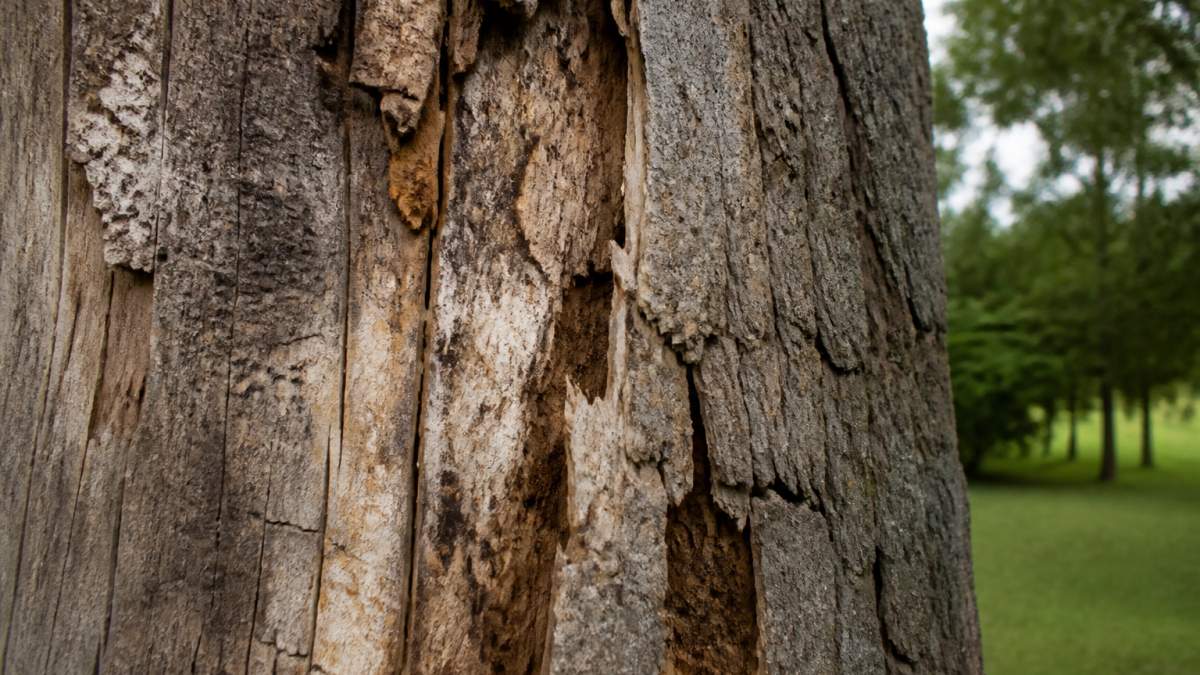
Visible cracks and splits in the trunk
Cracks and splits in the trunk are serious. They indicate internal stress or damage. A crack that runs vertically down the trunk is especially concerning, it suggests the tree is under structural strain and may fail along that line.
Look for:
- Vertical cracks running from top to bottom
- Horizontal cracks or splits
- Cracks that widen visibly between seasons
- Splits that expose wood inside the tree
A single small crack might not be urgent. But if the crack is deep, wide, or growing, the tree is weakening. Storm damage, frost, or age can cause these splits. Once they form, they rarely heal. The tree becomes more vulnerable with each season.
Dead branches and crown dieback
Dead branches hanging in the canopy are a hazard. They can fall without warning, especially during wind or rain. Crown dieback, where the upper branches gradually die off, shows the tree is struggling to stay healthy.
Watch for:
- Branches with no leaves or buds in spring
- Grey or brittle-looking wood
- Branches that snap easily when touched
- Large sections of the crown with no foliage
A few dead branches might just be natural pruning. But if dieback affects more than 25% of the crown, or if dead branches are large and overhanging property or paths, the tree is in decline. It won't recover, and the dead wood will only increase.
Cavities, hollow sections, and decay
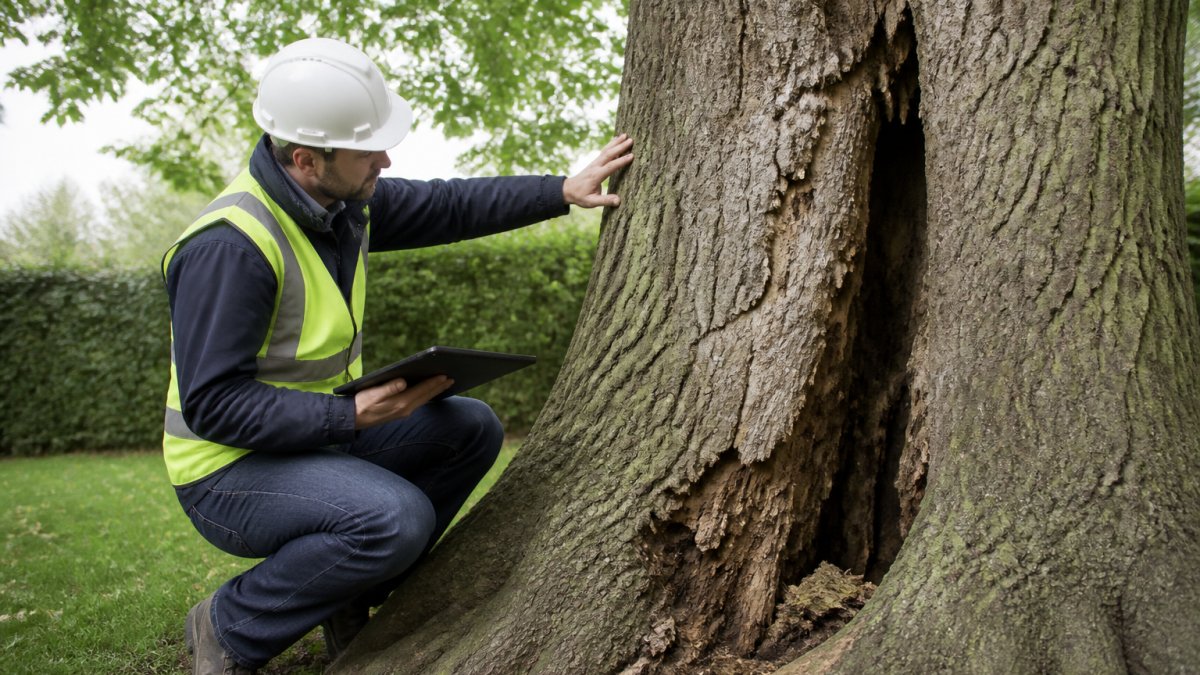
Cavities and hollow sections mean the tree is rotting from inside. This is one of the most serious structural problems. A tree that looks solid on the outside might be hollow within, unable to support its own weight.
Signs of internal decay:
- Visible holes or cavities in the trunk
- Soft, spongy wood when you press the bark
- Fungal growth or fruiting bodies on the trunk
- Sawdust or wood debris at the base
- A hollow sound when you tap the trunk
Decay spreads over years. A small cavity today becomes a larger weakness tomorrow. Trees with significant hollow sections are at high risk of failure, especially in strong winds or when heavy with snow.
Look for these visible warning signs that indicate a tree may be structurally unsafe.
| Warning sign | What it indicates | Action needed |
|---|---|---|
| Vertical cracks in trunk | Internal stress or structural strain | Urgent if deep, wide, or growing |
| Dead branches or crown dieback | Tree struggling to stay healthy | Urgent if over 25% of crown affected |
| Cavities or hollow sections | Internal rot and structural weakness | High risk of failure in wind or snow |
| Fungal growth on trunk | Active decay spreading through tree | Professional assessment required |
| Soft or spongy wood under bark | Advanced internal decay | Immediate professional assessment |
| Branches snapping easily | Dead or weakened wood | Remove or assess for safety |
| Hollow sound when trunk tapped | Possible internal cavity or rot | Professional assessment required |
Tree root damage signs and what they reveal
Root problems are harder to spot than branch problems, but they're just as serious. Roots anchor the tree and absorb water. Damage to roots undermines the entire structure.
Common root damage signs:
- Heave: The ground around the base is raised or cracked
- Exposed roots: Large roots visible above ground where they weren't before
- Lean: The tree tilts to one side, sometimes suddenly
- Soil subsidence: The ground sinks near the tree
- Damage from construction: Roots severed or compacted by building work nearby
Root heave is especially telling. It means the tree is losing stability in the soil. The roots are either dying, being pushed up by frost, or being disturbed by nearby work. Once heave starts, the tree's grip on the ground weakens progressively.
Exposed roots also signal trouble. Roots should stay in the soil. When they're visible at the surface, it usually means erosion, compaction, or root death has forced them upward. The tree becomes less stable with each passing season.
Storm damaged tree assessment after severe weather
After storms, trees can be damaged in ways that aren't immediately obvious. A tree might look fine the day after a storm but fail weeks later as internal damage spreads.
Storm damage to assess:
- Torn bark and exposed wood
- Large branches broken or hanging
- The trunk bent or leaning differently from before
- Roots lifted or soil displaced around the base
- Multiple branches snapped at similar heights (sign of high wind force)
The key is acting quickly. Fresh storm damage can be managed. Torn bark dries out and the tree can compartmentalise the wound. But if you wait, the exposed wood becomes an entry point for disease and decay. Within weeks, the damage can become irreversible.
Forestry Commission guidance on storm-damaged trees recommends professional assessment within days of severe weather. Don't assume the tree is fine just because it's still standing.
Leaning trees and structural imbalance
A tree that leans isn't necessarily hazardous. Many trees naturally grow at an angle. But a tree that has recently started leaning, or is leaning more steeply than it used to, is a warning sign.
Why lean matters:
- New lean: The tree has shifted recently, meaning roots or soil have failed
- Increasing lean: The angle grows steeper each year, showing progressive failure
- Severe lean: Over 45 degrees from vertical is unstable
- Lean after storms: The tree was pushed and didn't recover its original position
A slight lean from a young tree growing toward light is normal. But if a mature tree suddenly leans, or if an established lean gets worse, something has failed. Usually it's root damage, soil subsidence, or wind damage that's ongoing.
Check the lean by looking at the tree from different angles. Compare it to photos from previous years if you have them. Even a small increase in angle over months is significant.
When to call a tree surgeon about a hazardous tree
You don't need to be certain the tree is dangerous to call for help. If you've spotted any of the signs above, a professional assessment costs nothing and gives you certainty.
Call a tree surgeon when you see:
- Visible cracks, splits, or hollow sections
- Dead branches overhanging property or paths
- Recent lean or root heave
- Storm damage with exposed wood
- Fungal growth or signs of decay
- Branches that drop regularly without wind
A professional tree surgeon will assess the tree's stability, identify the specific risk, and recommend action. Find out what a professional tree assessment includes so you know what to expect. Sometimes that's removal. Sometimes it's targeted pruning or cable support. Sometimes it's monitoring. The point is knowing which one applies to your tree.
Arboricultural Association guidance on tree risk assessment sets standards for how professionals evaluate hazardous trees. A qualified surveyor will use these methods to give you a clear picture of what you're dealing with.
Don't wait for a tree to fail. Early assessment can prevent expensive emergency work by identifying problems before they become urgent. A tree that shows warning signs is telling you something is wrong. Acting on that signal is far cheaper than dealing with a fallen tree.
Getting a free hazard assessment for your trees
If you've spotted any warning signs in your own trees, the next step is simple: get a professional assessment. This isn't something you need to pay for upfront.
We offer free quotes provided via photo, video, or visit. You can describe the issue by email, phone, or video. Send us photos or a short clip of the tree, tell us what concerns you, and we'll give you an initial view of whether professional work is needed.
A free quote tells you:
- What options you have (removal, pruning, monitoring, support)
- Rough scope of work if action is needed
From there, you can decide whether to proceed. If you do, we'll provide a detailed quote with transparent pricing, no surprises, no costs that change halfway through.
The sooner you identify a hazardous tree, the sooner you can address it safely. Contact James David Forestry Ltd with photos or details of your trees, and we'll arrange an assessment that fits your schedule.
Frequently Asked Questions
What are the main signs of a dangerous tree?
The most obvious signs include visible cracks or splits running through the trunk, large dead branches in the crown, cavities or hollow sections, exposed roots, significant lean, or bark peeling away. After storms, look for snapped branches, torn bark, or uprooted root plates. Any combination of these suggests the tree needs professional assessment. Don't wait to investigate, hazardous trees can fail suddenly without warning.
How can tree root damage signs indicate a hazardous tree?
Exposed or lifting roots, soil heaving around the base, or visible root decay suggest the tree may not be anchored properly. Roots that are girdling the trunk (growing around it) restrict nutrient flow and weaken stability. If you notice the tree moving in wind, or soil is eroding away from the roots, the tree's foundation is compromised. These root damage signs often mean professional help is needed to assess whether the tree must come down.
When should I call a tree surgeon about a hazardous tree?
Call a tree surgeon immediately if the tree is leaning significantly, has large dead branches overhead, shows signs of decay or cavities, or is damaged after a storm. If you're unsure whether a tree is safe, contact a professional rather than risk it, they can provide a free quote. Don't attempt to prune or remove hazardous trees yourself; this work requires specialist training, equipment, and insurance.
Can a tree with a hollow trunk still be dangerous?
Yes. A hollow trunk can still support the tree's weight if the remaining wood is strong enough, but it's structurally weaker and more likely to fail in wind or storms. A hollow tree is unpredictable, it may stand for years or snap suddenly. If you spot a cavity or hollow section, have a tree surgeon assess it. They can determine whether the tree is safe to keep or should be removed for your property's safety.
Spotting a hazardous tree early gives you control. You choose when to act, not the tree. Whether you need removal, pruning, or just peace of mind, get a free assessment and find out exactly what you're dealing with. We'll handle the rest, safely, tidily, and with no hidden costs.

Need a tree surgeon?